Seven countries halving malaria
7 COUNTRIES HALVING MALARIA

In 2008, all 53 Commonwealth country leaders agreed a collective commitment to halve malaria in the Commonwealth by 2023. If we keep our pledges, implement the strategies, deliver the financing and political leadership promised at the London Malaria Summit, we will be able to prevent 350 million cases of malaria and save 650,000 lives in Commonwealth countries.
Here we're profiling 7 countries to see how progress is being made to halve malaria by 2023.
Malaysia
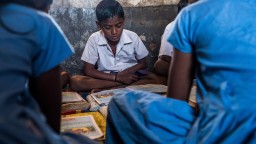
Malaysia is making great strides in its bid to eliminate malaria. There has been a 99% reduction in reported malaria cases in the past two decades and Malaysia is now categorised by the WHO as being in the pre-elimination phase. Cases of indigenous malaria reduced by 68% from 2016-2017. The Malaysian Government has worked hard with international partners to develop and strengthen its systems for surveillance, launching a training programme for local entomologists on malaria vector control and surveillance.

Australia
In recent years, Australia has emerged as an important leader in the fight against malaria. In 2017, Australia invested $US13.5 million to support malaria elimination efforts and this financing has been matched with strong political leadership. Australia’s Foreign Minister Julie Bishop joined the End Malaria Council, a committed group of senior leaders from government and business which aims to galvanise the political leadership, funding and technological innovations needed to end malaria.

Solomon Islands
While the Islands have made extraordinary progress and achieved a five-fold decrease in malaria cases over the past 25 years - its disease burden remains one of the highest outside Africa. 2018 marked an important turning point in the Solomon Islands’ eradication efforts. At the Commonwealth Malaria Summit in 2018, Prime Minister Houenipwela reaffirmed the country’s commitment to eliminate malaria completely by 2030. His vision for a ‘whole of society’ response to malaria, which prioritises hard-to-reach communities by galvanising women’s unions, church congregations, youth groups and health workers.
Sri Lanka
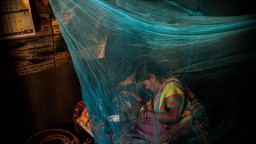
In September 2016, Sri Lanka was certified as a malaria-free nation by the World Health Organization. However, with 57 imported malaria cases in 2017, Sri Lanka is considered to be moderately vulnerable to the reintroduction of malaria. A Technical Support Group for malaria has played a crucial role in preventing a return of malaria, by providing technical support and advice on how to deal with imported cases. The challenge now is to ensure that any imported cases are tracked, tested and treated, and do not lead to onward domestic transmission and re-introduction of the disease.
Rwanda
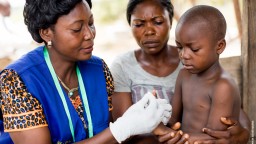
In 2011, Rwanda achieved an 87% reduction in malaria morbidity, but these gains were not sustained and between 2012 and 2017, there was an upsurge in malaria cases. The Government of Rwanda has recognised that sustaining the earlier gains in malaria control requires substantial financial resources and the adoption of different approaches to implementing vector control. Rwanda is now turning a positive corner. In 2017, cases of malaria reduced by 7% from 2016 levels. The challenge now is to sustain and accelerate this progress so that Rwanda can achieve the target to halve malaria by 2023.

Uganda
Malaria accounts for 4% of global malaria cases, but despite this heavy burden, significant progress has been made in recent years due to substantial investment in malaria control. Reported malaria cases declined by nearly 45% from 2013 to 2016, with parasite prevalence in children under 5-years reduced from 42% in 2009 to 19% in 2014. At the Commonwealth Heads of Government Meeting, President Museveni committed to support malaria control activities at the community level by providing bicycles to local parish chiefs to ensure appropriate use of all malaria interventions.
India
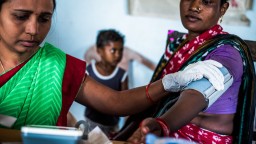
India achieved a 24% decrease in malaria cases between 2016 and 2017, making India the only country among the 11 highest-burden countries to mark progress in reducing cases of malaria during this timeframe. This progress is largely due to substantial reductions in malaria in Odisha State. Through sustained efforts, such as expanding access to diagnostics and treatment, strengthening data collection, distributing long lasting insecticidal nets and improving health care worker skills, Odisha recorded a remarkable decline of over 80% in reported malaria cases and deaths between 2017 and 2018.